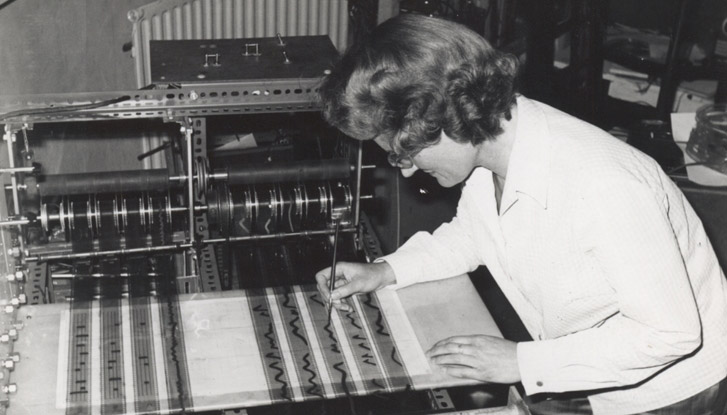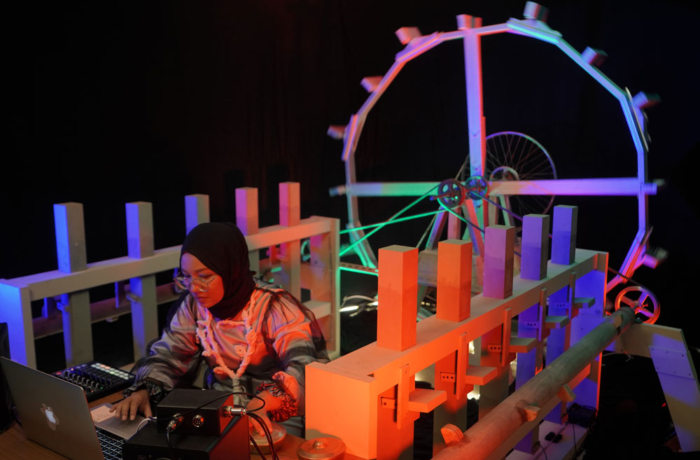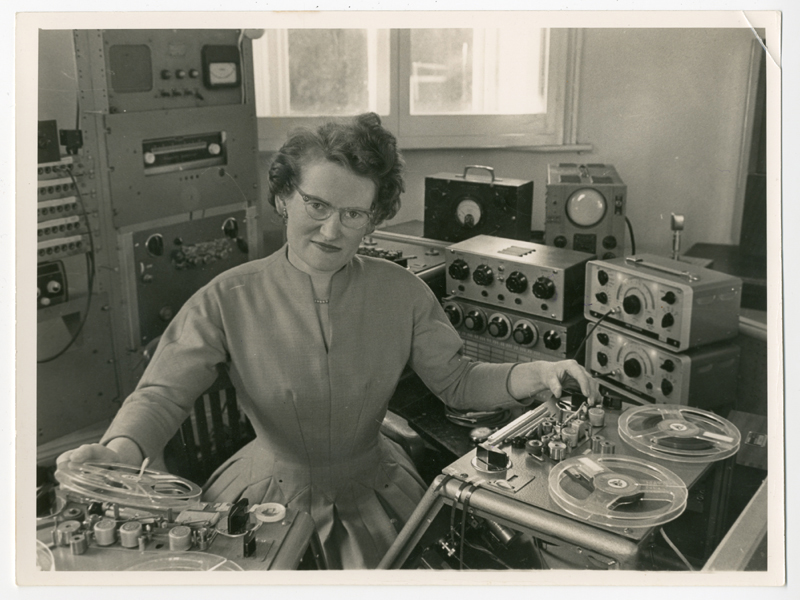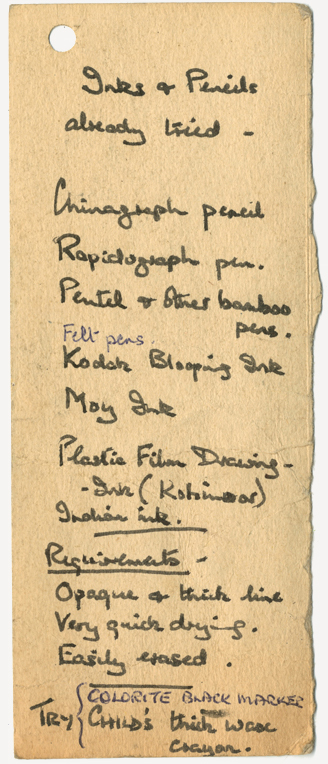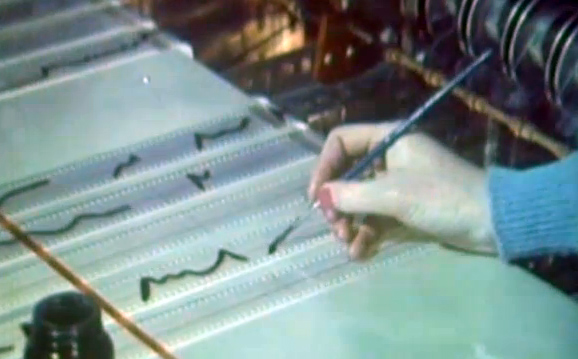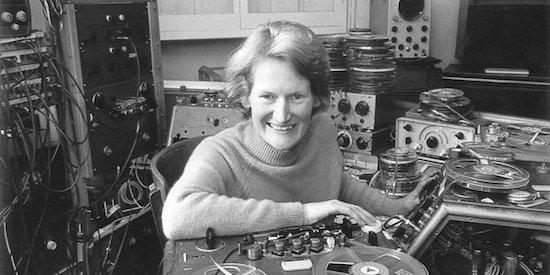

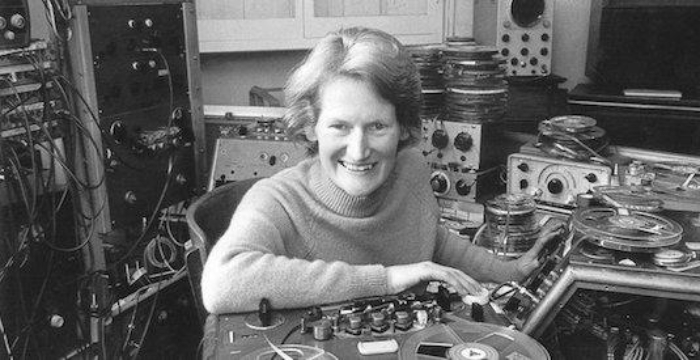
The BBC’s technology show Click recently featured Daphne Oram and the Oramics machine. It can be viewed here. The piece contains rare archive footage of Daphne Oram explaining the Oramics technique.
Pages
Links
Recent Comments
The BBC’s technology show Click recently featured Daphne Oram and the Oramics machine. It can be viewed here. The piece contains rare archive footage of Daphne Oram explaining the Oramics technique.
On Wednesday 9th November a talk on Daphne Oram and the philosophy of Oramics will take place at the Sound Arts & Design Department at the London College of Communication. In ‘The Legacy of Daphne Oram’, Chris Weaver and Dan Wilson will discuss the workings of the Oramics machine, its theory, origin, development and the sonic explorations it facilitated. Daphne Oram’s futurological and esoteric ideas will be examined, along with her later work involving her somewhat secretive computerised realisation of Oramics.
The official opening of The Science Museum’s ‘Oramics to Electronica’ exhibition took place earlier this month. Two short films were premiered: Aura Satz‘s ‘Oramics: Atlantis Anew’ followed by Nick Street and Jen Fearnley’s ‘Oramics to Electronica’ (charting the run-up to the opening of the exhibition).
An excerpt from Aura Satz’s atmospheric film, named after Daphne Oram’s futurological manifesto, can now be viewed on The Wire website by following this link.
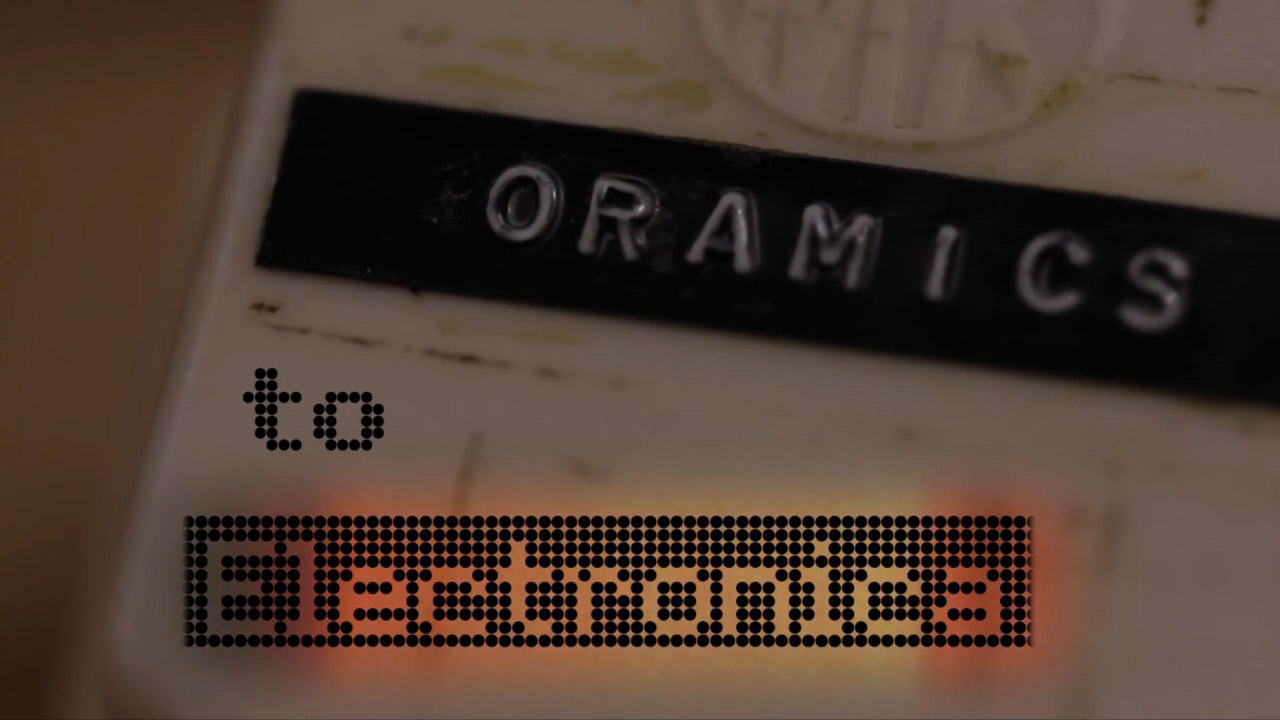
Street and Fearnley’s ‘Oramics to Electronica‘ documentary, meanwhile, is viewable in its entirety here.
Oramics to Electronica from Nick Street on Vimeo.
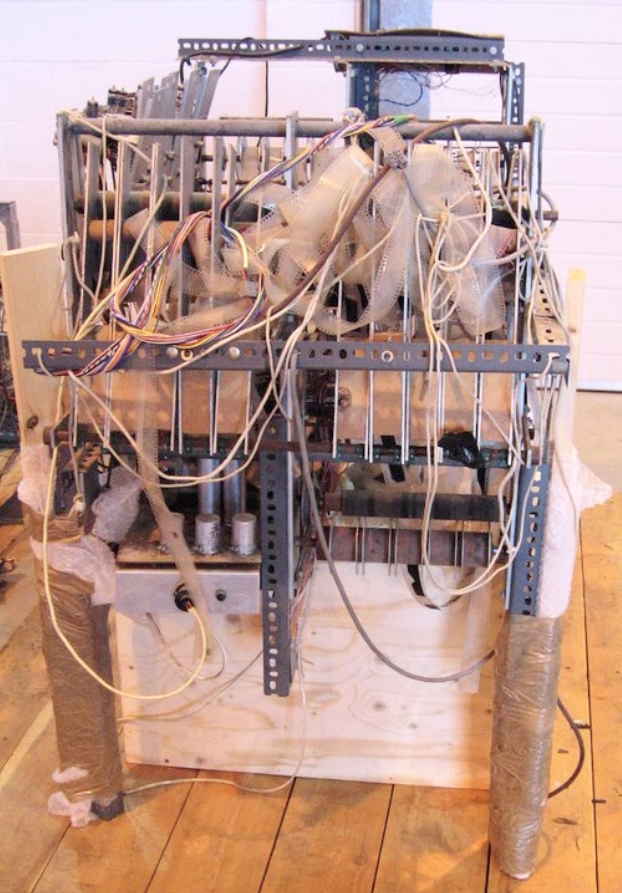
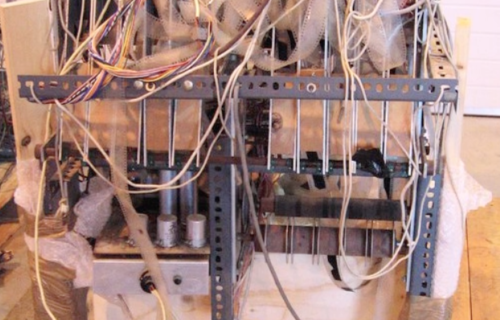
On Thursday 28th July, the Oramics machine was unveiled marking the start of the first phase of the Oramics to Electronica project at The Science Museum. All four elements of the Oramics apparatus are on display, namely, the loudspeaker cabinets, the waveform scanner, the amplifier and the control console itself. Rare interview footage with Daphne Oram is also featured, along with many other previously unseen curios.
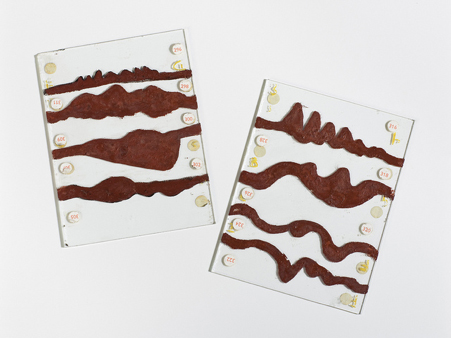
This is an amazing opportunity to view this groundbreaking and historic machine ‘in the flesh’. Earlier this year, chief curator, Dr. Tim Boon, pointed out at The Wire’s Daphne Oram salon the famous “grandfather’s axe” authenticity problem, which asks “does ‘grandfather’s axe’ remains his axe if both head and handle are replaced?” In view of this, the Oramics machine is exactly preserved – the only notable replacements being the celluloid film strips on the control console (the originals had become discoloured, warped and very brittle).
Goldsmiths University have provided an interactive Oramics emulator console to faithfully reproduce the Oramics machine’s capabilities. This is also soon to be made available as an iPhone app. A video showing this program in its experimental stage can be found here.
Details of the exhibition are available at The Science Museum’s Oramics to Electronica site, and plenty more can be found on the Oramics Machine’s Facebook page…
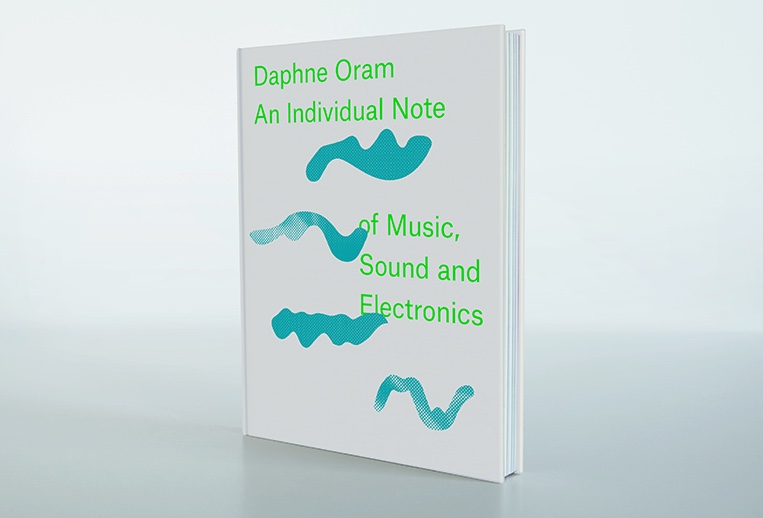
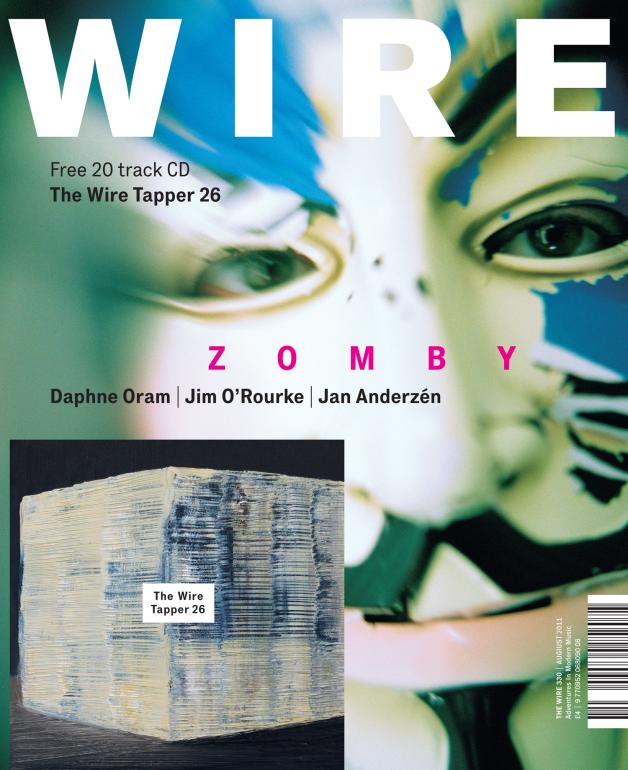
This month’s issue of The Wire (August 2011) contains the first in-depth examination of the intersections between Daphne Oram, the New Age movement and electronic music. Titled ‘The Woman from New Atlantis’, this article by Dan Wilson takes a look at her long out-of-print 1972 book, ‘An Individual Note of Music, Sound and Electronics’ along with her interests in deep listening, music therapy and archaeoacoustics (among other topics).
Within the article, a previously unpublished extraordinary futurological manifesto is reproduced, written by Daphne Oram in 1960, updating Sir Francis Bacon’s famous “we have also Sound Houses” quote from his New Atlantis. Oram variously called her utopia ‘The Newer Atlantis’ or, elsewhere, ‘Atlantis Anew’…
Related material may be found at The Portal on the The Wire website for the current issue.
The Science Museum is in the late planning stages for putting the Oramics Machine on show, with a target date of the end of June. The Museum will be working with interested individuals to develop the surrounding display; this will look at the origins of electronic music and its influence up to the present.
If you are interested, please go to the “The Oramics Machine” Facebook page to follow progress; e-mail publichistory@sciencemuseum.org.uk; or watch this space or for further details.
This exciting previously unseen 2009 six minute documentary by Nick Street shows the transportation of the Oramics synthesiser. It features Dr. Mick Grierson outlining the workings of the machine.
Oramics from Nick Street on Vimeo.
The Oramics machine is currently in the possession of The Science Museum, and is soon to be restored to its former glory. More details to come…
Thursday 7th April 2011
Cafe Oto, E8 3DL, London
The U.K music magazine, The Wire, have asked the Oram Archive to arrange one of their Salon events in London, early next month.
The event is being held on Thursday the 7th of April at Cafe Oto at 8pm. £4 on the door
The programme for the evening will include:
• A presentation by Dan Wilson tracing the evolution of the philosophies behind Oramics, and Daphne Oram’s progress in reconciling the physical and metaphysical aspects of sound. Oramics made incursions into the mysteries surrounding occulted conceptions of sound: its alleged healing and restorative powers, its role in providing ‘inspiration’, its analogies in colour, form and number, and its archaeoacoustics.
• A biographical sketch in the form of a presentation by Jo Hutton, looking at Daphne Oram’s role at the BBC in developing electroacoustic music and radiophonic art in Britain, as well as her subsequent independent studio work and the development of her drawn sound technique which emerged in tandem with the design and build of Oramics.
• A joint presentation by Mick Grierson and Chris Weaver on the evolution of the Oramics machine, its potential significance as one of the first British computer music systems, and the plans for its future conservation.
• A video presentation by Graham Wrench, the former RAF radar engineer responsible for building the first prototype of the Oramics machine.
Plus Dr. Tim Boon, chief curator at the Science Mueseum will talk about the upcoming plans to display the Oramics machine later this June.
Interval entertainment will come from Fari B who will be spinning previously unheard material from the Daphne Oram Archive.
Daphne Oram: A perspective on her pioneering contributions to technology and music, with special reference to the unique circumstances that shaped and influenced her achievements during her time at the BBC.
by PETER MANNING and NICOLA CANDLISH
Part of the Oramics Symposium held in Summer 08 at the Southbank Centre, London.
Peter Manning Discusses Daphne Oram Part 1 from Sonic Arts Network on Vimeo.
Peter Manning Discusses Daphne Oram Part 2 from Sonic Arts Network on Vimeo.
Peter Manning Discusses Daphne Oram Part 3 from Sonic Arts Network on Vimeo.
Friday 27 June 2008
South Bank Centre, London
Daphne Oram was an unsung pioneer of British electronic musician. This series of events celebrates the launch of the Daphne Oram Collection at Goldsmiths. For the past 12 months an Arts and Humanities Research Council grant has supported the digitisation of almost 700 reel to reel tapes of music, the archiving of over nine boxes of papers, and the creation of this website.
-
The life and work of Daphne Oram (Symposium)
12.00pm | Free
Purcell Room, South Bank Centre, London
This symposium considers her place in the history of electronic music, as well as exploring in academic depth, ideas and tools for graphic sound synthesis through the drawn sound system she invented and called Oramics. Speakers include Maddalena Fagandini and Jo Hutton, Professor Peter Manning, Dr Mick Grierson, and Rob Mullender.
-
Oramics: The Life and Works of Daphne Oram (Concert)
7.30pm | £3/£6
Purcell Room, South Bank Centre, London
This concert features unheard music by Daphne Oram, a pioneering British composer and electronic musician who died in 2003. Much of the music heard in this performance has been uncovered while digitising her tapes at Goldsmith’s College, London University. Other works, like Sardonica, written with Ivor Walsworth for piano and tape, receive their first performances in decades and special guest artists including Andrea Parker, creator of warm electro music, remix Daphne’s soundworld for a new generation, using drawn-sound techniques developed in the 1950s.
-
Oramics in the Front Room (Late Night Gig)
10.00pm | FREE
The Front Room (Queen Elizabeth Hall), South Bank Centre, London
A free gig featuring modern female AV pioneer People Like Us (Vicki Bennett) and Theremin exponent Ninki V.